
Quick answer
After a delivery van or truck crash, a delivery truck accident lawyer works to find out who employed or contracted the driver, who owned the vehicle, and which insurance policies apply. Many delivery vans weigh less than 10,001 pounds, so some federal trucking rules and federal minimum insurance levels may not apply to them.
If a delivery van, box truck or parcel truck hit you, the first question is often simple: who is responsible? The answer can be harder to find than you expect. A delivery truck accident lawyer looks past the logo on the van to learn who employed the driver, who owned the vehicle, and which insurance policies may apply.
This guide explains how those questions are investigated. It does not say that any company is or is not responsible for any crash. Every case turns on its own facts. For a broader overview, see our Phoenix truck accident lawyer page.
Why delivery crashes matter in Phoenix
Delivery traffic now reaches nearly every street in the Valley. Large distribution and fulfillment centers in the West Valley send vans and trucks onto freeways like the Loop 303 and Loop 202 and then into neighborhoods. Drivers often work under tight routes, with frequent stops, U-turns, double parking and backing in residential areas.
That mix puts delivery vehicles near pedestrians, cyclists and children far more often than a long-haul truck. For local data, see ADOT's Arizona Motor Vehicle Crash Facts (opens in a new tab).
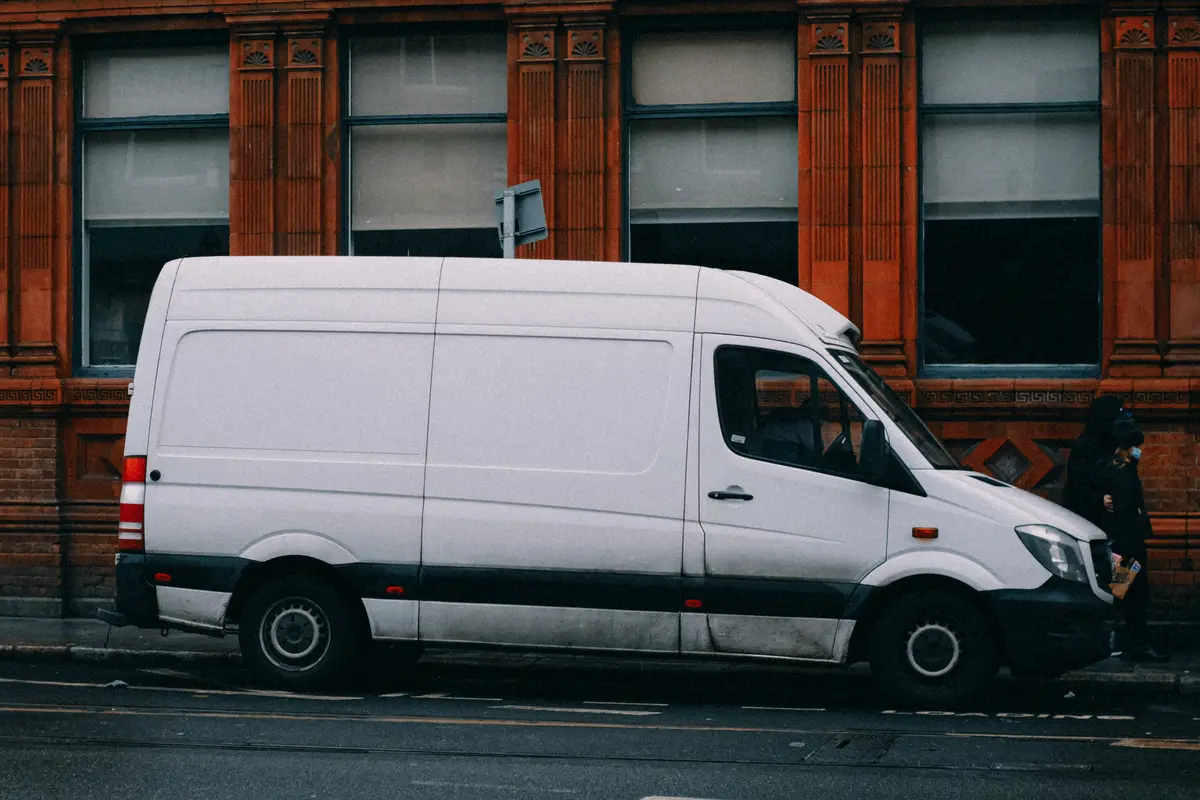
Who was the driver working for?
Delivery companies use different models, and one company may use more than one. The driver might be:
An employee of the company whose name is on the package or the vehicle.
An employee of a separate contractor business that delivers packages for a larger company. Amazon, for example, describes its Delivery Service Partners (opens in a new tab) as independent businesses that hire and manage their own employees.
An independent contractor, sometimes using a personal vehicle through an app.
A driver for a separate carrier hired to move freight between facilities.
A van's branding does not, by itself, answer who the driver worked for.
How responsibility is investigated
In general, an employer can be responsible for an employee's negligence while the employee is doing the job. A business that hires a true independent contractor is generally not responsible for that contractor's negligence, but there are exceptions. Those exceptions may include cases where the business kept control over how the work was done, or was careless in choosing the contractor. Whether any exception applies depends on the facts.
To sort this out, an investigation may look at:
Who hired, paid, trained and supervised the driver.
Contracts between the delivery business and the larger company.
Who owned, leased and maintained the vehicle.
Route, scheduling and performance rules the driver had to follow, and who set them.
Telematics, GPS, app logs and in-vehicle camera footage.
Every insurance policy that might apply.
Arizona assigns fault among everyone who contributed to a crash, and each defendant is generally responsible only for its own share (A.R.S. 12-2506 (opens in a new tab)). That is why finding every responsible party matters. Our guide on who is liable in a truck accident explains this in more detail.
Insurance: why vehicle weight matters
Federal trucking rules mostly apply to a "commercial motor vehicle." For interstate property carriers, that generally means a vehicle with a gross vehicle weight rating or actual weight of 10,001 pounds or more (49 CFR 390.5 (opens in a new tab)). Many cargo vans are rated below that weight. Larger box trucks and parcel trucks may be above it. The weight rating label on the vehicle answers the question for a specific van or truck.
Weight affects insurance:
| Vehicle | Federal minimum in 49 CFR 387.9 | What may apply |
|---|---|---|
| For-hire interstate carrier, 10,001 lbs or more, general freight | $750,000 | Carrier's commercial policy; possibly others |
| Vehicle under 10,001 lbs, no hazardous materials | Generally none under 387.9 | Arizona minimums at least; often a commercial or business auto policy |
The 387.9 minimums apply only to the carriers described in 49 CFR 387.3 (opens in a new tab), which covers for-hire interstate property carriers and certain hazardous materials carriers.
The $750,000 federal minimum applies to for-hire carriers of non-hazardous property in interstate or foreign commerce, using vehicles of 10,001 pounds or more (49 CFR 387.9 (opens in a new tab)). For vehicles under that weight, the 387.9 table lists minimums only for certain hazardous materials. Our guide to truck insurance limits covers the federal tiers in more depth.
Arizona's own minimum liability limits, for policies issued or renewed beginning July 1, 2020, are $25,000 for injury or death of one person, $50,000 for two or more people, and $15,000 for property damage (A.R.S. 28-4009 (opens in a new tab)). Those are floors, not typical business limits. A delivery business, the vehicle owner or a larger company may carry separate policies, and whether any of them covers a given crash depends on the policy terms.
When the delivery vehicle is a larger truck
Not every delivery vehicle is a van. Box trucks, parcel trucks and tractor-trailers that move goods between warehouses may be heavy enough to count as commercial motor vehicles. When they are used in interstate commerce, more of the federal safety rules can come into play. For trucks used only within Arizona, state motor carrier law generally treats a truck as a commercial motor vehicle at 26,001 pounds or more (A.R.S. 28-5201 (opens in a new tab)).
Those rules may include:
Driver qualification files, which carriers keep for each driver (49 CFR Part 391 (opens in a new tab)).
Hours-of-service limits on how long a driver may drive and be on duty. See our guide to hours of service violations.
Inspection, repair and maintenance duties for the vehicles a carrier controls (49 CFR 396.3 (opens in a new tab)).
Whether these rules apply to a given truck depends on its weight rating, how it was used and whether the trip was interstate. The vehicle's registration, weight rating label and the company's USDOT records can help answer that.
What the insurer may say
After a delivery crash, you may hear from more than one insurance company. One may say the driver was "just a contractor." Another may say its policy does not cover the trip. Some may ask for a recorded statement or a broad medical release right away.
Those early statements are not the final word on who is responsible. They are the start of the questions that need answers. Keep every letter, email and claim number, and write down who called you and when.
Common delivery crash patterns
Backing crashes in driveways, alleys and parking lots. Arizona law bars backing unless it can be done with reasonable safety and without interfering with other traffic (A.R.S. 28-891 (opens in a new tab)).
Sudden stops and double parking that lead to rear-end or lane-change crashes.
Pedestrian and cyclist crashes during drop-offs.
Rushed turns and U-turns on residential streets.
Freeway crashes involving larger box and parcel trucks.
What to do after a delivery van or truck crash
Get medical care and follow your doctor's advice.
Call police and get the report number.
Photograph the vehicle, including logos, the license plate, any USDOT number, and any company or contractor name on the doors.
Get the driver's name and employer. Ask who they drive for. Write down the answer exactly as given.
Look for video. Doorbell and home security cameras are common on residential streets. Ask neighbors quickly, since some systems record over footage.
Do not give a recorded statement to any insurer before you get legal advice.
Ask a lawyer about preservation letters for telematics, app data and in-vehicle video. Learn more in our truck accident evidence guide.
Arizona law that applies
Two-year deadline for most injury lawsuits (A.R.S. 12-542 (opens in a new tab)).
Public entity vehicles. If a government-owned delivery or service vehicle is involved, a notice of claim is due within 180 days (A.R.S. 12-821.01 (opens in a new tab)), and a lawsuit generally within one year (A.R.S. 12-821 (opens in a new tab)).
Comparative fault. Damages may be reduced by your share of fault but are not automatically barred (A.R.S. 12-2505 (opens in a new tab)).
How we can help
A lawyer can help identify the companies behind the driver and the vehicle, request the contracts and policies that matter, and send preservation letters. Our contingency fee means no attorney fee unless there is a recovery. The fee percentage and how case costs are handled depend on the case, and if there is no recovery you may still owe case costs. Attorney Gil Hacohen speaks English, Hebrew and Spanish.
Talk to a Phoenix truck accident lawyer for free
Tell us what happened. We'll review your situation and explain your options. There's no fee unless you recover money.
Frequently asked questions
If an Amazon, FedEx or UPS-branded van hit me, is that company responsible?
Not automatically, and not automatically excluded either. Some delivery drivers are employees of the company whose name is on the package, and others work for separate contractor businesses. Responsibility depends on who employed the driver, who controlled the work, who owned the vehicle and what the contracts and insurance policies say. Those facts have to be investigated.
What is a Delivery Service Partner?
Amazon describes its Delivery Service Partners as independent businesses that hire and manage their own employees to deliver Amazon packages. How that arrangement affects responsibility for a particular crash is a legal question that depends on the facts.
Do federal trucking insurance minimums apply to delivery vans?
The federal minimum levels in 49 CFR 387.9 apply to for-hire interstate carriers using vehicles with a gross vehicle weight rating of 10,001 pounds or more, plus certain hazardous materials carriers (49 CFR 387.3). Many cargo vans are rated under that weight, so those federal minimums may not apply. Other policies may still cover the crash.
What is the minimum insurance for a vehicle in Arizona?
For policies issued or renewed beginning July 1, 2020, Arizona's minimum liability limits are $25,000 for injury or death of one person, $50,000 for two or more people, and $15,000 for property damage, under A.R.S. 28-4009. Business vehicles often carry more, but that has to be confirmed.
What if the driver was using a personal car for app-based deliveries?
Coverage can get complicated. A personal auto policy may treat delivery work differently, and the app company or a commercial policy may or may not provide coverage. The policies and the driver's status at the time of the crash need to be reviewed.
How long do I have to file a claim?
Most Arizona injury lawsuits must be filed within two years under A.R.S. 12-542. If a government-owned vehicle is involved, a notice of claim is due within 180 days under A.R.S. 12-821.01, and a lawsuit generally within one year under A.R.S. 12-821.