
Quick answer
An I-17 truck crash can happen in central Phoenix traffic or on the steep grades between Black Canyon City and Sunset Point. Brake condition, driver fatigue and speed on long grades may all matter, so the carrier's logs, maintenance files and engine data should be protected quickly. Arizona generally allows 2 years to file a lawsuit (A.R.S. 12-542), with shorter deadlines if a public entity is involved.
If you were hurt in a crash with a semi on I-17, an I-17 truck accident lawyer can help you understand what caused the crash and who may be responsible. I-17 runs from central Phoenix through Anthem, New River and Black Canyon City, then climbs steep grades toward Sunset Point, Cordes Junction and Flagstaff. This page covers why truck crashes on I-17 can be complex, what to do afterward and the Arizona deadlines that may apply. It is part of our Phoenix truck accident overview and is general information, not legal advice for your case.
Why I-17 matters for truck crashes
I-17 is the main freeway link between Phoenix and northern Arizona. It carries commuters in the city, weekend travelers headed to the high country and commercial trucks moving freight between the Valley and I-40 in Flagstaff.
The freeway changes character along the way. In Phoenix, it is a crowded urban freeway with closely spaced exits. North of Anthem, it becomes a mountain highway with long climbs, curves and descents. Both settings can create risks for heavy trucks.
In Phoenix: the Split, the Durango Curve and the Stack
I-17 begins at the I-10 "Split" near Sky Harbor Airport. It runs west as the Maricopa Freeway, turns north at the Durango Curve southwest of downtown, and meets I-10 again at the Stack, just west of downtown, according to ADOT's guide to Valley freeway nicknames (opens in a new tab). Tight curves and heavy merging traffic can be hard for long trucks. Our guide to Stack interchange truck accidents covers that interchange in detail.
North of the Durango Curve, I-17 is known as the Black Canyon Freeway. Past the Stack, it runs through north Phoenix and meets Loop 101 and then Loop 303.
North of Phoenix: Anthem to Black Canyon City
Past Loop 303, I-17 reaches Carefree Highway (SR-74), the Anthem area and New River. The road then leaves the Valley and heads toward Black Canyon City.
ADOT's I-17 Improvement Project (opens in a new tab) added a third travel lane along about 15 miles between Anthem Way and Black Canyon City and two flex lanes along about 8 miles between Black Canyon City and Sunset Point. ADOT reports that construction is complete. The flex lanes typically carry northbound traffic Monday through Saturday and southbound traffic on Sundays, and ADOT can change their direction for heavy traffic or a crash.
The northern grades: Black Canyon City to Sunset Point and beyond
North of Black Canyon City, I-17 climbs past Bumble Bee (exit 248) to the Sunset Point rest area (milepost 252), then continues to Cordes Junction and SR-69 (exit 262), Camp Verde, the SR-179 turnoff toward Sedona and I-40 in Flagstaff. Overall, I-17 rises from the low desert to the high country around Flagstaff.
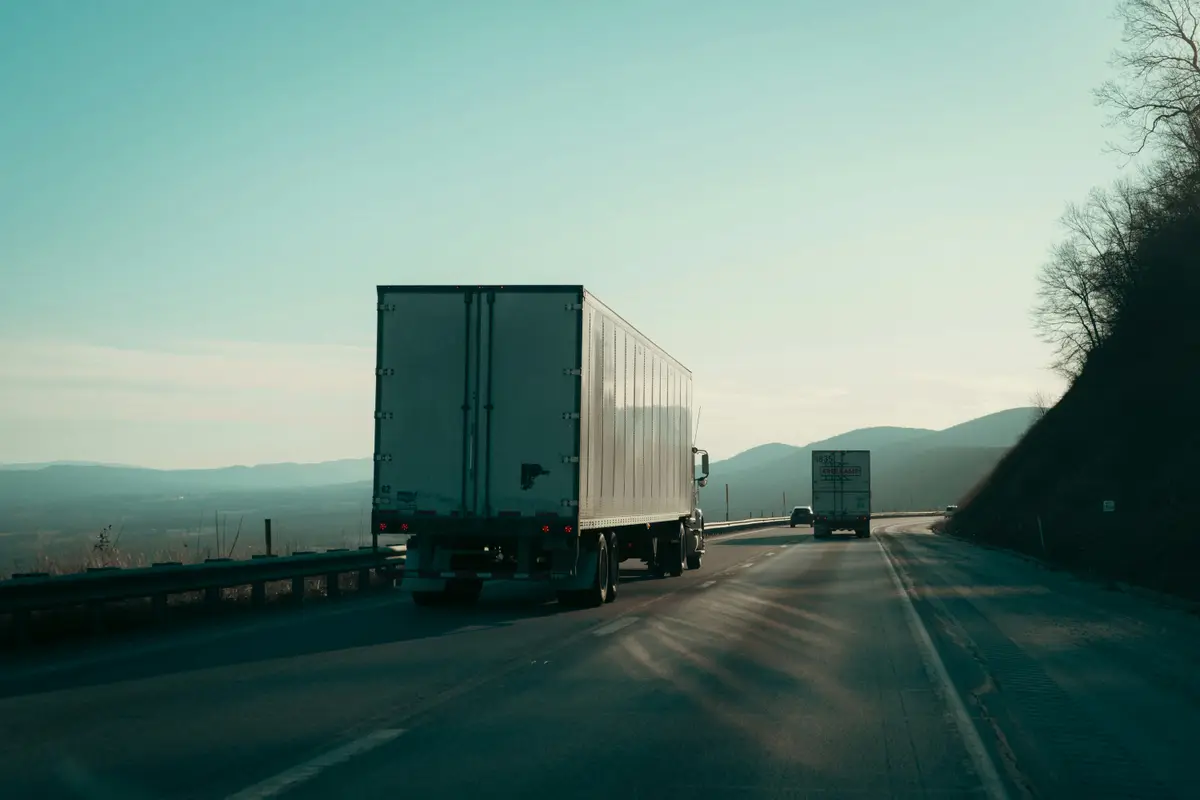
Long grades put stress on a truck's brakes, engine and tires. On the way down, a driver who relies too heavily on the service brakes may lose braking power. On the way up, loaded trucks may slow sharply, and faster traffic may come up behind them quickly.
Common causes of I-17 truck crashes
Each crash depends on its own evidence. On I-17, truck crashes may involve:
Brake problems on downgrades. Carriers must inspect, repair and maintain their vehicles under 49 CFR Part 396 (opens in a new tab), and brake equipment rules appear in 49 CFR Part 393 (opens in a new tab).
Driver fatigue. Long trips between Phoenix and Flagstaff or beyond can push drivers toward their hours limits.
Speed for conditions. Curves, grades, rain and winter weather near Flagstaff can call for slower speeds than the posted limit.
Jackknifes and rollovers, which can happen when a truck brakes hard on a curve or downgrade. Read more about jackknife, rollover and tire blowout crashes.
Slow-moving trucks on climbs, which can lead to rear-end crashes or unsafe passing.
Work zones and lane shifts during construction.
Hours of service
Federal rules generally limit property-carrying drivers to 11 hours of driving within a 14-hour on-duty window, and require a 30-minute break after 8 hours of driving, under 49 CFR 395.3 (opens in a new tab). Some exceptions apply, such as for certain short-haul drivers. Electronic logging device (ELD) data can show whether a driver followed these limits. Our guide to hours of service violations explains how this evidence is used.
Who may be responsible
Depending on the facts, these parties may share fault for an I-17 truck crash:
the truck driver
the motor carrier
the owner of the tractor or trailer
a maintenance shop that worked on brakes or tires
a shipper that overloaded or improperly loaded the trailer
a parts maker, if a defective part failed
Arizona generally makes each defendant responsible only for its own share of fault, under A.R.S. 12-2506 (opens in a new tab). There are exceptions, for example when parties acted in concert or one was the other's agent or employee.
Evidence to protect after an I-17 crash
Evidence in a grade-related crash often includes brake inspection and maintenance records, engine control module data showing speed and braking, ELD data, dispatch records and dash camera video.
Federal rules require carriers to keep records of duty status and supporting documents for at least 6 months, under 49 CFR 395.8(k) (opens in a new tab). Engine data and video may be lost much sooner if the truck is repaired or returned to service.
Read our full truck accident evidence guide for more.
What to do after a truck crash on I-17
Call 911 and get medical care.
Note your location. Write down the nearest exit, mile marker or landmark, such as "southbound I-17 near Sunset Point."
Get the report number from the responding officer. Crashes on I-17 are generally investigated by Arizona DPS troopers, and DPS explains how to request a copy of a report (opens in a new tab).
Photograph the truck. Include the company name, USDOT number, trailer number and plates, as well as the road, any skid marks and the weather.
Collect witness names and numbers.
Keep records of medical care, bills, missed work and travel costs, especially if you live outside the Phoenix area.
Avoid recorded statements to the trucking company's insurer. You do not have to give one.
Talk to a lawyer early so evidence can be preserved. You can request a free case review.
What a claim may include
No lawyer can promise what a claim is worth. Value depends on the injuries, the evidence, the insurance available and how fault is divided. In Arizona, an injury claim may seek money for losses such as:
past and future medical care, including care you receive after returning home
lost wages and reduced ability to work
pain, suffering and loss of enjoyment of life
vehicle and property damage, plus towing and travel costs
Arizona's constitution bars laws that cap damages for injury or death, under Article 2, Section 31 (opens in a new tab). If a family member died, a wrongful death claim may be brought by a surviving spouse, child or parent, or by the personal representative, on behalf of the close family members listed in A.R.S. 12-612 (opens in a new tab).
If you live outside Arizona, keep copies of all treatment records from home as well as from Arizona hospitals. Ask about meeting by phone or video if travel is hard.
Arizona law and deadlines
Time to file. Arizona generally allows 2 years from the date of injury to file a personal injury lawsuit, under A.R.S. 12-542 (opens in a new tab). Some exceptions can change that timing.
Public entities. If the state or another public entity may share fault, for example through a work zone, a notice of claim is generally due within 180 days under A.R.S. 12-821.01 (opens in a new tab), and a lawsuit within 1 year under A.R.S. 12-821 (opens in a new tab).
Shared fault. Under A.R.S. 12-2505 (opens in a new tab), your damages may generally be reduced by your share of fault rather than barred.
Insurance. Interstate for-hire carriers hauling general freight in vehicles of 10,001 pounds or more must carry at least $750,000 in liability coverage, with higher minimums for certain hazardous loads, under 49 CFR 387.9 (opens in a new tab). See our truck insurance limits guide.
How we can help
We help people hurt in truck crashes on I-17, whether in central Phoenix or on the grades north of Anthem. Our Phoenix truck accident lawyer page explains our overall approach. We work on a contingency fee, so you pay no attorney fee unless money is recovered. The fee percentage and how case costs are handled depend on the case, and if there is no recovery you may still owe case costs. Attorney Gil Hacohen speaks English, Hebrew and Spanish.
Talk to a Phoenix truck accident lawyer for free
Tell us what happened. We'll review your situation and explain your options. There's no fee unless you recover money.
Frequently asked questions
Where are the steep grades on I-17 north of Phoenix?
I-17 climbs from the low desert in Phoenix to the high country around Flagstaff. ADOT describes the roughly 8 miles between Black Canyon City and Sunset Point as steep and winding. That climb runs north from Black Canyon City past Bumble Bee (exit 248) toward the Sunset Point rest area (milepost 252).
Can brake problems be the trucking company's fault?
They can be. Carriers must inspect, repair and maintain their vehicles under 49 CFR Part 396, and brake equipment rules appear in 49 CFR Part 393. Maintenance records may show whether those duties were met.
The truck driver had been on the road for hours. Does that matter?
It may. Property-carrying drivers are generally limited to 11 hours of driving within a 14-hour on-duty window under 49 CFR 395.3. A violation can be important evidence, but it does not decide a case by itself.
Who investigates crashes on I-17 outside Phoenix?
Crashes on interstates such as I-17 are generally investigated by Arizona Department of Public Safety troopers, including in Yavapai County north of the Maricopa County line. DPS says completed reports usually reach its records unit within about 14 days, and copies can be requested through the DPS Public Services Portal, in person or by mail.
I live in another state and was hurt on I-17 while visiting. Can I bring a claim?
Generally, a crash that happens in Arizona can be pursued under Arizona law, even if you live elsewhere. Deadlines still apply.
Can I recover if the crash happened in the flex lanes or a work zone?
Possibly. Depending on the facts, the trucking company, a contractor or a public entity may share fault. Claims involving a public entity generally require a notice of claim within 180 days (A.R.S. 12-821.01) and a lawsuit within 1 year (A.R.S. 12-821).