
Quick answer
After a garbage truck accident, the first question is who owns and operates the truck. If a city or other public entity runs it, Arizona generally requires a notice of claim within 180 days and a lawsuit within one year. If a private hauler or construction company runs it, the usual two-year deadline for injury lawsuits generally applies.
A garbage truck accident can happen almost anywhere: on your street, in an alley, at a shopping center or on a busy road. Garbage and dump trucks are heavy, stop often and back up more than most vehicles. They also work close to pedestrians, cyclists and children.
The most important early question is who owns and runs the truck. A city garbage truck and a private hauler's truck can follow very different claim rules and deadlines. This guide explains the difference. For a broader overview, see our Phoenix truck accident lawyer page.
Why garbage and dump truck crashes matter in Phoenix
Phoenix and its neighboring cities are spread out, with long residential routes and many alleys. Trash trucks run those routes on a regular schedule, often early in the morning. Some Valley cities run their own residential collection. The City of Phoenix Public Works Department, for example, provides residential trash and recycling collection (opens in a new tab) from alleys and curbs. Businesses, apartment complexes and some communities may use private haulers.
Dump trucks are a constant part of the Valley's growth. They carry rock, sand, dirt and debris between job sites, quarries and landfills, often on the same roads as daily commuters. For local data, see ADOT's Arizona Motor Vehicle Crash Facts (opens in a new tab).
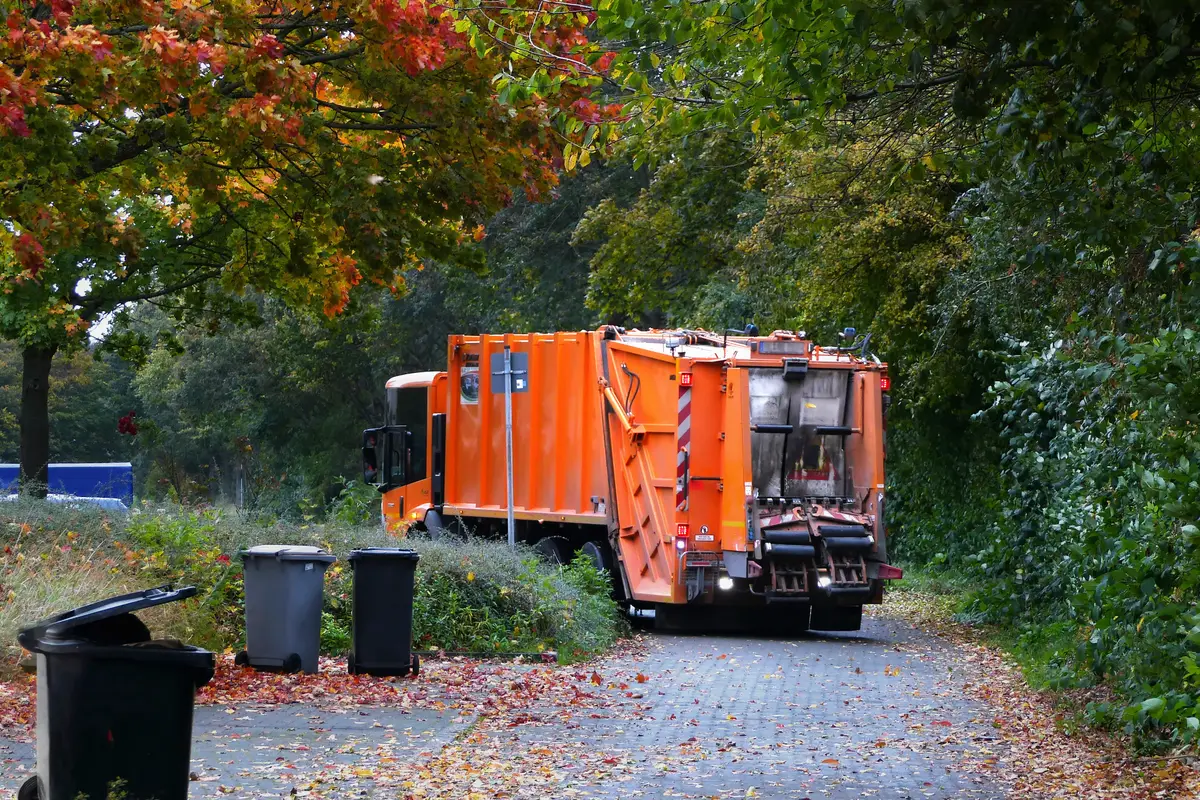
City-owned or private: why it matters
If a city or other public entity runs the truck
Arizona has special rules for claims against a "public entity," which includes the state and any political subdivision of the state (A.R.S. 12-820 (opens in a new tab)). Those rules include:
A 180-day notice of claim. You must file a claim with the person authorized to accept service for the public entity or employee within 180 days after the cause of action accrues. It must include facts explaining why the entity is liable, and a specific amount for which the claim can be settled, with facts supporting that amount (A.R.S. 12-821.01(A) (opens in a new tab)). A claim not filed within 180 days is barred.
When the clock starts. The cause of action accrues when the injured person realizes they have been damaged and knows, or reasonably should know, what caused it (A.R.S. 12-821.01(B) (opens in a new tab)).
Deemed denial. A claim is treated as denied 60 days after filing unless the claimant is told in writing sooner (A.R.S. 12-821.01(E) (opens in a new tab)).
A one-year lawsuit deadline. Actions against a public entity or public employee must be brought within one year after the cause of action accrues (A.R.S. 12-821 (opens in a new tab)).
Public entities may also have legal defenses that private companies do not, such as the immunity provisions in Arizona's public entity statutes (for example, A.R.S. 12-820.01 (opens in a new tab)).
What a notice of claim usually involves
A notice of claim is more than a form letter. Under the statute, it must go to the person or persons authorized to accept service for the public entity under the Arizona Rules of Civil Procedure. It must give enough facts for the entity to understand why it may be liable. It must also state a specific dollar amount for which the claim can be settled, along with facts supporting that amount (A.R.S. 12-821.01(A) (opens in a new tab)).
That means gathering medical records, bills, wage information and other support within the 180-day window, sometimes while treatment is still going on. A different timing rule applies to minors and to people who are insane or incompetent: they may file within 180 days after the disability ends (A.R.S. 12-821.01(D) (opens in a new tab)).
If a private hauler or construction company runs the truck
Claims against private companies generally follow Arizona's two-year deadline for injury lawsuits (A.R.S. 12-542 (opens in a new tab)). A private company working under a city contract is not automatically treated as a public entity. Arizona's public entity statutes define "employee" to exclude independent contractors (A.R.S. 12-820 (opens in a new tab)).
If you are not sure who runs the truck, it is safer to treat the 180-day deadline as possibly running until you know.
Federal rules may not apply to city trucks
The Federal Motor Carrier Safety Regulations in that subchapter generally do not apply to transportation performed by a state or a political subdivision of a state (49 CFR 390.3(f)(2) (opens in a new tab)). That exception does not reach everything. The federal CDL rules and the drug and alcohol testing rules state that the 390.3(f) exceptions do not apply to them (49 CFR 383.3(b) (opens in a new tab); 49 CFR 382.103(c) (opens in a new tab)). Arizona's motor carrier safety law also applies to commercial vehicles owned or operated by the state or a political subdivision (A.R.S. 28-5202(B) (opens in a new tab)). Private haulers may be covered by the federal rules, depending on the vehicle and the type of operation.
Common garbage and dump truck crash patterns
Backing crashes
Garbage trucks back into alleys, cul-de-sacs and driveways. Drivers may have large blind spots behind the truck. Arizona law bars backing unless the move can be made with reasonable safety and without interfering with other traffic. It also bars backing on a ramp, access road or roadway of a controlled access highway (A.R.S. 28-891 (opens in a new tab)). Backup cameras, alarms and spotters may be part of the investigation.
Residential streets
On collection day, trucks stop at nearly every house. Drivers may pull around them, and people walk near them. Crashes can involve cars passing the truck, pedestrians near the curb and cyclists. Arizona's "move over" rule applies when a driver approaches any stationary vehicle that is displaying alternately flashing lights or warning lights. On a highway with at least four lanes, at least two of them going in the driver's direction, the driver must move to a lane not next to the stopped vehicle if it is safe to do so; otherwise, the driver must slow down and proceed with caution (A.R.S. 28-775(E) (opens in a new tab)). Whether it applied in a given crash depends on whether the truck was displaying those lights.
Construction truck accidents: dump trucks and falling loads
Construction trucks, such as dump trucks, gravel haulers and concrete mixers, often work on busy roads around building sites. Dump trucks are often loaded heavy and can be slow to stop. Loose rock and debris can fly off an uncovered or overfilled load. Arizona law bars driving with a load that can drop, sift, leak or otherwise escape from the vehicle, with narrow exceptions (A.R.S. 28-1098 (opens in a new tab)). Where federal rules apply, a truck's cargo must be secured to prevent it from leaking, spilling, blowing or falling (49 CFR 393.100 (opens in a new tab)).
The federal rear impact guard rule does not cover every vehicle. It excludes some, such as road construction controlled horizontal discharge trailers. Low chassis, special purpose and "wheels back" vehicles can meet the rule if their body or chassis gives comparable rear-end protection (49 CFR 393.86(b) (opens in a new tab)). Learn more about rear and side guards in our underride truck accident guide.
If you work on or around the truck
Sanitation workers, helpers and construction crews can be hurt by their own truck or by a passing vehicle. Workers' compensation is generally the only remedy against your own employer, with limited exceptions (A.R.S. 23-1022 (opens in a new tab)). You may also have a claim against someone outside your employer, such as a driver who hit you. If you do not file that third-party lawsuit within one year, the claim is assigned to the comp insurer or self-insured employer (A.R.S. 23-1023 (opens in a new tab)). Read more in our guide for people hit by a truck at work in Arizona.
Who may be responsible
Depending on the facts, investigators may look at:
The driver and any spotter or helper on the truck.
The city, county or other public entity that runs the truck.
A private hauler or construction company.
A company that loaded the dump truck.
The truck's maintenance provider, or a manufacturer if a defect is suspected.
Arizona assigns fault among everyone who contributed, and each defendant is generally responsible only for its own share (A.R.S. 12-2506 (opens in a new tab)). Your own share of fault may reduce your damages but does not automatically bar the claim (A.R.S. 12-2505 (opens in a new tab)). Our guide on who is liable in a truck accident covers this in more depth.
What to do after a garbage or dump truck crash
Get medical care and keep your records.
Call police and get the report number.
Photograph the truck. Capture the city seal or company name, truck number and plate.
Note the time and place exactly. Collection routes are scheduled, and route records can help confirm which truck was there.
Look for video. Doorbell cameras and home security systems often capture residential crashes. Some trucks also have their own cameras.
Write down the date of the crash and mark 180 days later on your calendar in case a public entity is involved.
Do not give a recorded statement to an insurer or claims adjuster before you get legal advice.
Ask a lawyer about preserving evidence, including truck camera footage, route data and maintenance records. See our truck accident evidence guide.
Smaller trash and recycling vehicles and service vans raise some of the same ownership and insurance questions as parcel vans. Our delivery truck accident lawyer guide explains how those are investigated.
How we can help
A lawyer can help identify who owns and operates the truck, prepare and file a notice of claim when a public entity is involved, and request route, camera and maintenance records. Our contingency fee means no attorney fee unless there is a recovery. The fee percentage and how case costs are handled depend on the case, and if there is no recovery you may still owe case costs. Attorney Gil Hacohen speaks English, Hebrew and Spanish.
Talk to a Phoenix truck accident lawyer for free
Tell us what happened. We'll review your situation and explain your options. There's no fee unless you recover money.
Frequently asked questions
How do I know if a garbage truck is city-owned or private?
Look at the markings on the truck, the crash report and who collects trash in that area. Some Valley cities, including Phoenix, run their own residential collection, while other customers may use private haulers. A lawyer can confirm the owner and operator through records requests.
What is a notice of claim?
It is a written claim that must be filed with the person authorized to accept service for a public entity, public school or public employee within 180 days after the cause of action accrues. It must explain the basis for liability and state a specific amount for which the claim can be settled, with supporting facts. A claim not filed in time is barred. See A.R.S. 12-821.01.
How long do I have to sue a city in Arizona?
Actions against a public entity or public employee must be brought within one year after the cause of action accrues under A.R.S. 12-821. The 180-day notice of claim must come first (A.R.S. 12-821.01).
What if a private trash company or construction dump truck hit me?
Claims against private companies generally follow the two-year deadline for injury lawsuits in A.R.S. 12-542. If a public entity might share fault, its shorter deadlines may still apply to that part of the claim (A.R.S. 12-821.01 and 12-821).
Do federal trucking rules apply to city garbage trucks?
Federal Motor Carrier Safety Regulations in that subchapter generally do not apply to transportation performed by a state or a political subdivision of a state, under 49 CFR 390.3(f)(2). Other rules still apply, including Arizona traffic laws and the federal CDL and drug and alcohol testing rules, which expressly do not use that exception (49 CFR 383.3(b) and 382.103(c)). Arizona's motor carrier safety law also applies to commercial vehicles owned or operated by a city or other political subdivision (A.R.S. 28-5202(B)).
Gravel flew off a dump truck and hit my windshield. Is that covered?
It may be. Arizona law bars driving with a load that can drop, sift, leak or otherwise escape, with narrow exceptions (A.R.S. 28-1098). Identifying the truck quickly is often the hardest part.